Art of our Time

ART OF OUR TIME?
Today, a wide gulf of misunderstanding persists between the contemporary art world and the rest of society. Those people who are not connected to the art community often seem to harbor doubts and suspicions about the seriousness of its world-view, and the meaningfulness of its collective efforts. For so many, the rules of the art world seem particularly opaque and even arbitrary, particularly when it comes to the art market. The fact that a single painting can be sold for more than a hundred million dollars at auction seems to typify a milieu in which objects of art are more sought after than any other type of valuable, while countless artists continue to struggle to break even, after they’ve paid their studio rent and purchased art supplies. In fact, to become an artist today seems to be a very hazardous way of making a living, as one labors in a state of ongoing uncertainty as to whether the work one is creating is worth being collected at competitive prices, and if so, whether that same work will continue to have interest to viewers five, ten, or fifty years in the future.
In addition to the points above, there is a lopsided quality to contemporary art that has only become more exaggerated in recent years, and which has to do with its growing ability to cross over into other areas of cultural production, where there is a tendency for it to be noticed by many more people. The examples of video-artist-turned-filmmaker Steve McQueen and painter-turned-filmmaker Julian Schnabel are maybe the most frequently cited, if only because their creations, upon leaving the art world, were enjoyed by millions more people than had access to them when they showed in art galleries instead of cinemas. Even without crossing into other media, highly celebrated artists like Jeff Koons and Damien Hirst are familiar to a much broader public today than perhaps any visual artists have been since Andy Warhol. Even a William Kentridge, who started out making handmade animations and producing puppet theater in Johannesburg, and is today directing major productions for the Metropolitan Opera, has become a household name in a way that wasn’t true when the primary audience for his work was still the art world.
It’s ironic that because of this limited degree of public exposure through the mass media for a tiny handful of contemporary artists, the public conception of what an artist does has probably become more detached from reality than ever before. Since artists are primarily seen in public at parties, openings, awards, and other events, the general sense of what they do with the rest of their time is not as clear-cut as would be the case, say, for an actor or musician, who is obliged after all to rehearse or practice for long hours before sharing the fruits of that labor before a public. And yet, becoming an artist remains a potentially glamorous, even romantic, choice of vocation for many young people, despite the fact that due to this thick fog of unknowing that surrounds the profession, who artists are and what they do is a subject that rarely seems to be addressed outside the well-policed boundaries of the profession, despite the fact that most of us still expect the artists of our age to make work that will stand the test of time.

Although it would be statistically difficult to determine by any objective means, this last point is a critical one in terms of a larger argument being made within this book. While people, generally speaking, are fully aware that museums of art such as the Louvre or the Prado are filled with objects of beauty that, to a degree, could be considered representative of the age in which they were produced, there seems to be less of a sense of obligation regarding those works of art being made by the current age, as well of which of them will be passed along and how they will be interpreted by those who follow us. If we consider this point relative to the other creative disciplines, such as film or popular music, it’s easy to see how such a perspective would be considered indefensible. The very premise that the music of our time is somehow disposable relative to the great music of the relatively recent past, or that movies simply aren’t as good as they used to be, seems an affront to us personally, as if we are inferior beings living in an inferior age. Of course, it is natural to want to argue that the historical moment which we call the present is every bit as capable of producing great works of art, music, film and literature as any other age before us, and that the capability of producing greatness in creative expression is part of what defines a cultural epoch. In the same way that we, as individuals, would agree that we will not want to have lived an aimless life, so the sense that our age will produce something worth remembering is a kind of core identity that binds us all together.
If we can all agree with the premise that most people would prefer to live in an age that is capable of making a lasting contribution to cultural history, then the opening observations about the gulf between contemporary art and the general public should be cause for concern. What does it imply, for instance, to suggest that we live in a society where it would be considered somewhat strange not to be familiar with the films currently on offer, or new music being released, but not having any firsthand knowledge of the world of contemporary art is a completely normal and accepted state of affairs? Given that the overwhelming majority of this year’s movies will be completely forgotten by next summer, and a taste for the latest trends in music tend to fade as one gets older, this still doesn’t explain why art does not claim a functioning role in the lives of more people, especially if the collective desire to live in a world that produces memorable art is something that is generally shared.
Let’s pause for a moment to examine the notion that civilizations prefer to not be forgotten. Living in the age that we inhabit, with profound technological advances constantly redrawing the preexisting boundaries between public and private, between work and leisure, and between self and others, it seems almost inconceivable that we would have no artists struggling to make sense of this ever-mutating existence, in order to pass on the results of that struggle for coherence to future generations, to make of it what they will. Whether justified or not, we believe at our core that there are some distinctive characteristics about this particular moment in the course of history that makes it not only unique from all the other moments, but eminently capable of generating profound truths to be shared with future generations. Notwithstanding the reality that all ages have felt this way about the times they live in, this hunger to transcend frivolity and make a lasting statement is one factor that has tended to propel the emergence, recognition and celebration of great artists throughout history, despite the almost uncannily inability of anyone to predict from whence such greatness might emerge. Artists may be public intellectuals, or they might be timid recluses – the force of their contribution to culture comes only from their art, in much the same way that while an historical age might be known for its wars, its famines or its commercial genius, the hard evidence that continues to interest most of us is by way of the art it produced. If there was no art made of lasting value, then it is hard to come to any conclusion other than that age was incapable of producing it.

If the gulf that exists between the general public and contemporary art is not the result of any collective desire to leave a mediocre impression for posterity, then why is there such suspicion about the ultimate motives of the many fine artists who live and work among us today? In order to answer that question satisfactorily, first it is probably vital to clarify that those who spend their lives toiling in the art community would also like to see this age produce an art that can be remembered for many generations to come. In other words, those who make art and those who profess to be puzzled by it share one essential trait, which is that they wish for the art of our time to be of such enduring consequence that people will look back on it years from now and wonder at the marvels of a society that would have created such spellbinding artworks as those. So if more or less everybody is in agreement that it is preferable to produce lasting artistic contributions rather than non-lasting ones, the question of when and how such suspicions about artists first arose is certainly worth asking.
For centuries, the people who held the primary responsibility for making paintings, sculptures, illuminated manuscripts, and heraldic designs were considered artisans instead of artists, and were strictly regulated by guilds. Almost without exception they toiled for the church or royalty, although during the Italian Renaissance it was not uncommon to be employed by both. It wasn’t until the Dutch so-called Golden Age of painting in the 17th century that artists came to be seen more generally as highly skilled authors of multi-layered works that, by dint of existing outside the confines of religious faith or royal doctrine, had to compete within a small but fiercely competitive market of luxury goods sustained by a small handful of prosperous merchants and traders. Successful painters had to be true virtuosos with the brush, a trend which gave rise to the popularity of the meticulously rendered still life during an age in which books with detailed engraved illustrations were widely distributed, and the ability to use the technology of painting to fool the viewer’s sense of visual perception was a way of occupying the furthest point where science, philosophy and art all met. Well into the 19th century, the cult of the artist as a species of visionary genius flourished throughout Europe, although traces of this ascription can be found as far back as the Italian Renaissance.
By the end of the 19th and the beginning of the 20th century, the formerly reliable set of standards by which an artist’s particular level of genius could be determined had shifted dramatically. On the one hand, the invention of photography had changed the rules of representation overnight, and suddenly the compulsion to register visual sensation the way a camera lens would do so was less convincing than it had been. The Impressionist generation of the 1870s-1880s, whose works today seem to embody the essence of grace and delicacy with respect to the representation of nature, were widely ridiculed by hostile critics during their time, who denounced the artists’ experimentation with systems of light patterning and optical effects as alternately a form of barbarity or as merely a cheap stunt. In this sense, the Impressionist were the first generation of artists to fully experience a sense of ‘lag time’, between the point in time at which one or more artists experiences a form of breakthrough in their artistic practice, and that later moment when this breakthrough is more generally recognized and appreciated. It didn’t take all that long for the Parisian art establishment to catch up to what the Impressionists were doing, but there was a lot of theoretical squabbling along the way, some expert reputations were bruised, and in this unceremonious way the first avant-garde movement in art history emerged - a bit scuffed and disoriented by the birthing, but intact nonetheless.
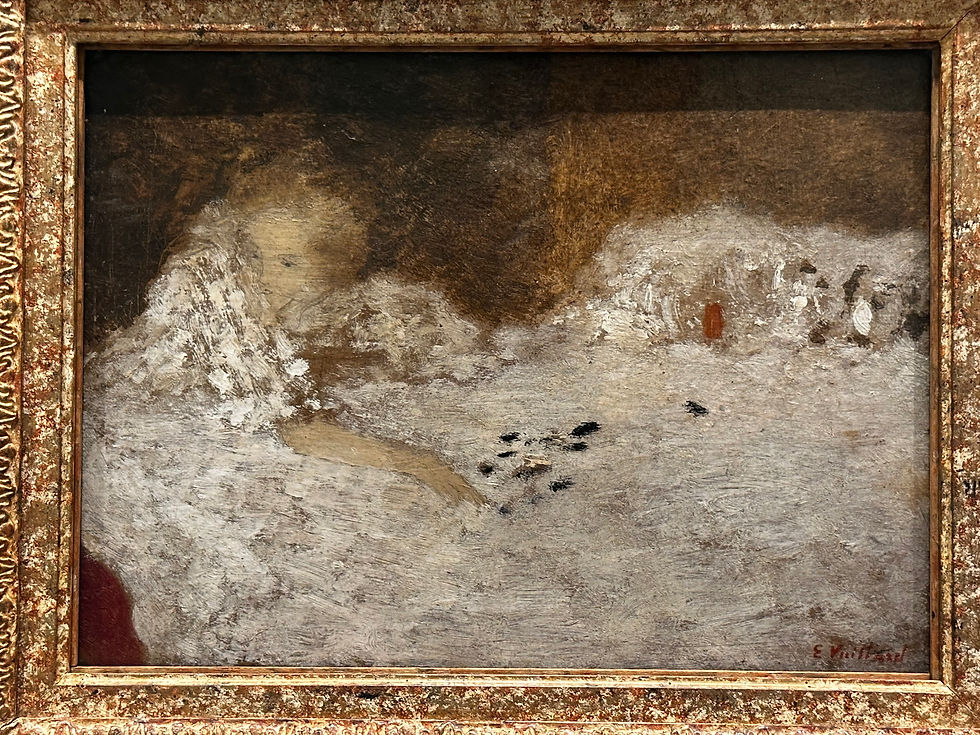
When art historians and critics try to evoke how the ‘lag time’ that the Impressionists experienced nearly a hundred and fifty years ago, and which is still very much in effect today, works its pernicious effect on artists, they are somewhat at a loss to make a comparison with other art forms. What if, for example, the Hollywood economy functioned on the basis of how much a film would earn over a ten-year period, and to gauge its success not so much on the basis of how much it earned the month, or even the year, that it opened. Since much of a movie’s fate rests, in fact, on what happens at the box office its first weekend, and since much of a musician’s latest release depends on how many units can be sold the week it hits the market, the time frame that the art world typically operates on does not apply in the rest of the cultural sphere. Of course there are exceptions: the ‘cult’ movie that starts off very small, but then gathers a growing audience with each year, so that two or three decades after its release, it is considered a ‘classic.’ In literature, it is more commonplace to think about a new book in terms of its prospects over a three- or five-year period, but this is true in part because it typically takes authors a good deal of time to complete one, so that the best-selling ‘literary’ authors are only expected to produce a new title every few years, whereas nobody is surprised when a movie director or pop musician releases two or more titles in a single year. In other words, the time-frame within which we inform ourselves about and consume most cultural products is very different from the time-frame within which art is expected to be made, shown, purchased, written about, included in museum exhibitions, and eventually considered to be an iconic piece for its time. Many years can pass between the artist’s completion of the work and the world’s embrace of it, and within the art world, this is almost universally considered to be the most natural life cycle of the object of art. On the contrary, something that becomes too well known too quickly is looked on with suspicion, as if it had not yet been inspected by a sufficient number of interested parties to warrant its newfound status.
Just as it would be considered nonsensical to suggest that musicians and film directors limit their production to one release or fewer per year, so it makes little sense within the art world to tell artists or galleries to try and speed things up (art fairs have tried, and the results, for the most part, have not been pretty). Art takes time, but as a consequence of the time that it takes, it also becomes subject to the kinds of suspicions that dogged the Impressionists. For most of the last hundred years, each new development in modern and contemporary art has been greeted with hoots of derision and/or howls of outrage, both from within the ivory towers of the artistic academe, as well as from the mass media – which, when it covers art at all, is usually angling for the kind of scandal that has brought acclaim and attention to so many other artists in the past, in part by helping to reinforce the idea that artists themselves seek to be as outrageous as possible. If that connection doesn’t by itself sound familiar, it certainly doesn’t take much digging through the historical record to locate period references to Henri Matisse as a madman or, more recently, to Andy Warhol as a fraud. With relatively few exceptions, this is a state of affairs that has been imposed on artists by third parties, but the mere fact that there are exceptions, and that in fact some artists have openly sought scandal, or even infamy, muddies the point considerably. Nonetheless, even if we take a relatively non-controversial figure like Pablo Picasso as our example, it would probably surprise many Americans to learn that his first museum exhibitions in the U.S. were greeted with picket lines and protest signs. The conviction – dubious at best – that he was a Communist was as much at the heart of the public’s objection to Picasso as the nature of his paintings, but for most people the two went hand in hand. It didn’t matter if he painted that way because he was a Communist or vice versa – it was not something that Americans wanted in their communities, as it clearly had no meaning or value for the upright citizens such as themselves.

Setting aside momentarily the perplexing question of Picasso’s ideological leanings, the primary reason Americans in the 1950s reacted violently toward his work was because it was drastically, unflinchingly new. Everything about the way he painted was deemed threatening, from his post-Cubist compositions and jagged, distorted portraits to his seemingly violent brushstrokes and clashing color palette. In a way, it wasn’t even Picasso’s paintings that felt threatening so much as the changing, modern world that the paintings represented. Maybe there were people in that brave new world who understood and appreciated this crazy art – or claimed they did --, but somehow their existence made it even worse. Picasso’s art, for that swath of post-WWII Americans who knew who he was, became an embodiment of a world whose underlying laws and assumptions seemed to be shifting so quickly that if people couldn’t alter the pace at which that broader change was unfolding, they could at least attempt to halt the enshrinement of a bunch of modern European paintings into their local museum.
At the heart of this conflict over the appearance of something new and threatening in the work of Matisse, Picasso and/or Warhol is a set of deeper cultural beliefs about the primary medium that all three artists practiced, which is painting. More than any other medium except perhaps for music, the primordial act of creating an image using tools has linked the underlying concept of art to the medium of painting. From the prehistoric caves of Altamira and Lascaux to the cutting-edge galleries of today’s Chelsea and Lower East Side neighborhoods, painting has literally always existed, and because of its deep historical roots reaching back through the dawn of what we consider civilization, it is quite natural and understandable for some people to feel a proprietary sense of ownership regarding its status. For centuries, in fact, painting bore the unique responsibility of conveying images of the divine to the far corners of the planet, so that to alter painting’s status for the sake of pushing it forward in time was somehow to implicitly challenge the very bedrock assumptions of what constitutes art.
And yet, based on this same cultural premium with which painting is regarded, it should not be surprising to anyone that it is also the medium of choice for artists who wish to unleash a new set of artistic principles or propositions for the world at large to ponder. After all, it’s logical to assume that if an artist can take a position decisively and emphatically within the medium of painting, it thereby increases the likelihood that this position will be legible to those who are the most conversant in the codes and languages of that medium, namely those curators, collectors, critics, and other artists who have been closely following the recent developments of painting on an ongoing basis, and are intimately familiar with all of the recent occasions during which the twists and turns of painting’s apparent status have held the art world in a state of suspended disbelief. If that group of interested observers – or at least a significant subset of them – can envision an impending paradigm shift in taste within which whatever this painter is doing would suddenly make a great deal more sense, thereby impacting a larger number of people than is possible otherwise, then the change within the medium, collectively speaking, is already underway. It does require anybody’s proclamation that a shift has taken place, but where the might have been resistance there is acceptance instead, which points to a more concentrated group of experts who are overseeing the broadening of the parameters surrounding the discussion of art.

Comments